
Brown Valley Wild Civet Coffee (Kopi Luwak) - Light Roast, Ground for Cold Brew
A genuine rarity from Brown Valley Coffee Estate, Koraput, Odisha - wild civet cat coffee (Kopi Luwak), wild-foraged (never caged) and hand-collected in small, seasonal batches.
Light roasted and ground for cold brew. A smooth, low-acid concentrate made by steeping coarse grounds in cold water for hours.
₹1,300
₹5,200 / kg
Drink it well: don't have more than 25 g of ground coffee a day, and look after your electrolytes - we recommend bananas, citrus fruits, vegetables, dairy and plenty of water. Coffee keeps you energetic, but don't forget to have at least 2 meals a day.
Roasted only after you order - we don't hold coffee bean stock, so it's always freshly roasted.
We roast after we receive your order, and we dispatch within 2-10 days, depending on the orders we have.
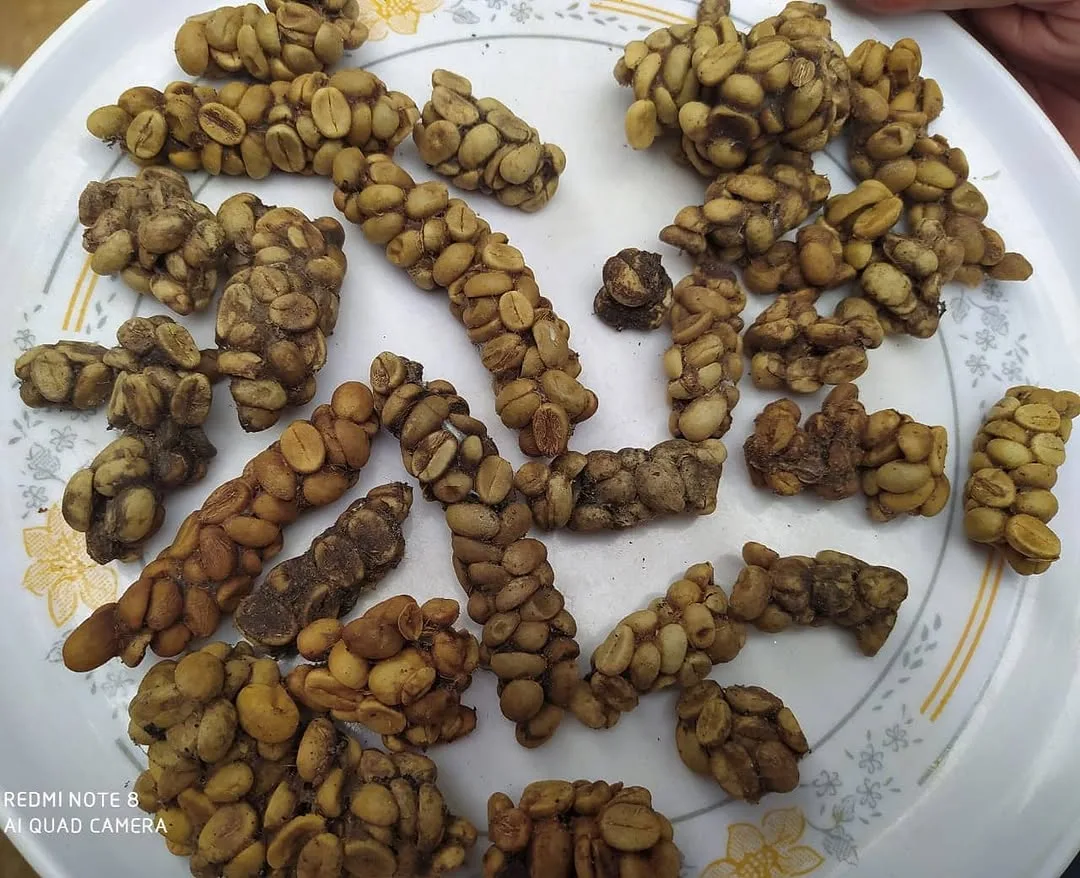
Exclusively foraged at Brown Valley Coffee Estate in Boipariguda, Koraput, this is genuine wild civet cat coffee, also known as Kopi Luwak.
Coffee cherries are eaten by the wild Asian palm civet, undergo natural fermentation and enzymatic changes in its digestive tract, and are then hand-collected from droppings in the wild, thoroughly cleaned, and sun-dried.
Fully washed, it produces a smooth, low-bitter cup with rich chocolate, earthy, and creamy dairy-like notes.
Wild-foraged, never caged, and available only in small, seasonal quantities.

Cold Brew
A smooth, low-acid concentrate made by steeping coarse grounds in cold water for hours.
- 1Add 1 heaped tbsp of coarse-ground coffee per 200 ml of room-temperature or cold water to a jar or French press.
- 2Stir to make sure all the grounds are saturated.
- 3Cover and refrigerate for 12–18 hours.
- 4Strain through a mesh filter or plunge (if using a French press) to separate the grounds.
- 5Dilute the concentrate with water or milk to taste, and serve over ice.
Tips
- • Longer steeping (up to 24 hrs) gives a stronger concentrate - dilute more to compensate.
- • The strained concentrate keeps well in the fridge for up to a week.
Reviews
Write a Review
Loading reviews…
Good to know

Flavour notes describe the tastes and aromas you might pick up in the cup - similar to tasting notes on wine or whisky. They come from the coffee's origin, processing method, and roast, and are a guide to what to expect rather than a guarantee of what you'll taste.
Coffee where the outer fruit skin and sticky pulp are completely removed from the coffee bean using water then the bean is dried.