• Gray Cup
Best French Press Recipes for Medium Roasted Coffee
The French press is the brewer we recommend most often at Gray Cup, mostly because it's so hard to mess up. Hot water, coarse coffee, a timer, done. But "hard to mess up" isn't the same as "great," and a medium roast is where the press really shows what it can do. Below are the five French press recipes we use with medium roast coffee, each written for a specific Gray Cup coffee, with exact grams, water temperature and steep time.
Key Takeaways
- Gray Cup recommends 30 g of coarse ground coffee for French press with 500 ml of water at about 94 °C, steeped for 4 minutes, as the default recipe.
- Medium roasts suit the press: enough body for a full cup, enough acidity to stay lively over a long steep.
- The single biggest upgrade is breaking the crust at 4 minutes, skimming the foam and waiting a few more minutes before you pour.
- Our favourite everyday French press coffee is Attikan Washed Coffee; for milk, Filter Coffee (Pure Arabica) in a Medium roast is better value.
- Pour every last drop out once it's brewed. Coffee left sitting on the grounds keeps extracting and turns bitter.
Why medium roast works in a French press
Immersion brewing is patient. The coffee sits in water for four minutes or more, and a metal mesh lets oils and fine particles through that a paper filter would catch. That's why a press cup feels heavier than a pour-over. It also means the coffee you choose has nowhere to hide.
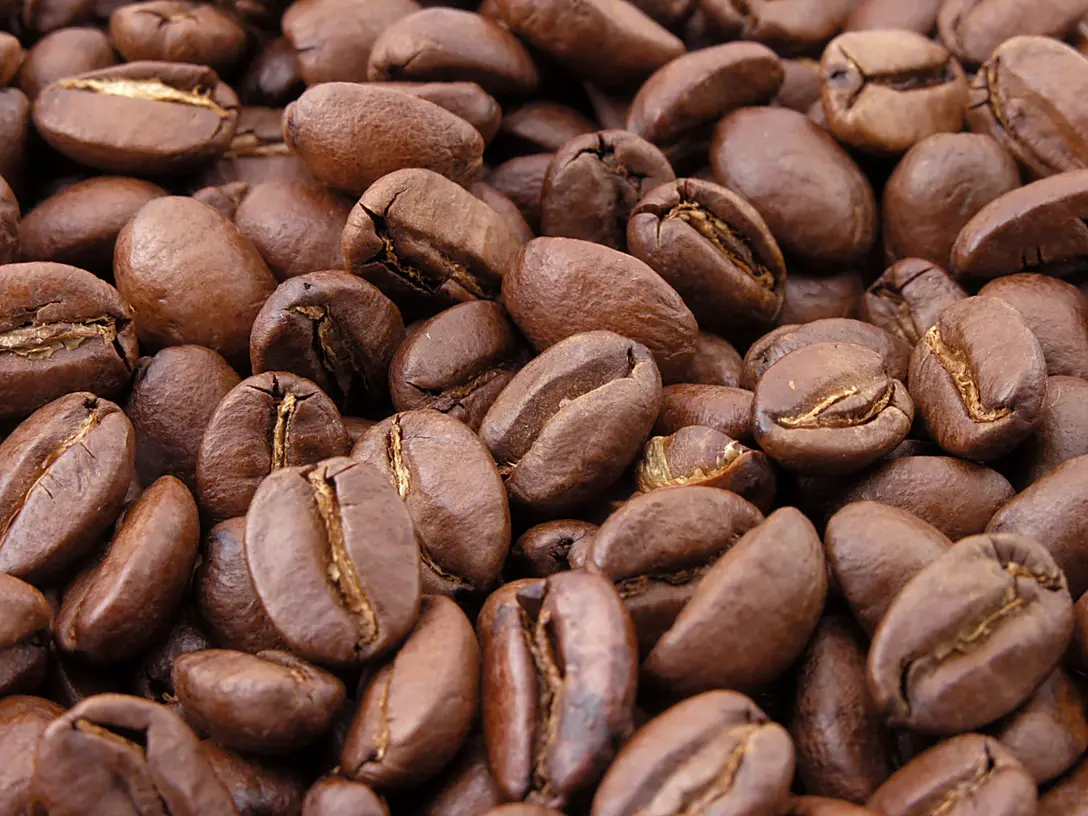
Very light roasts can taste thin and sour in a press. Very dark roasts turn muddy and ashy over a long steep. Medium sits in the useful middle, where you still get fruit and sweetness but there's enough body to fill the mouth. In our experience, Indian Arabicas at a medium roast are the sweet spot, all caramel and orange peel.
There's plenty of it to choose from. As of 2026, the Coffee Board of India puts the final 2025-26 Arabica crop at 1,11,000 tonnes (Coffee Board of India, 2026). That's a lot of good coffee. We'd rather you drank it fresh.
If you're still choosing a coffee, our guide to the best coffee for French press covers the shortlist, and our best medium roast coffee in India guide compares more options.
Coarse ground coffee for French press: grind, ratio, water
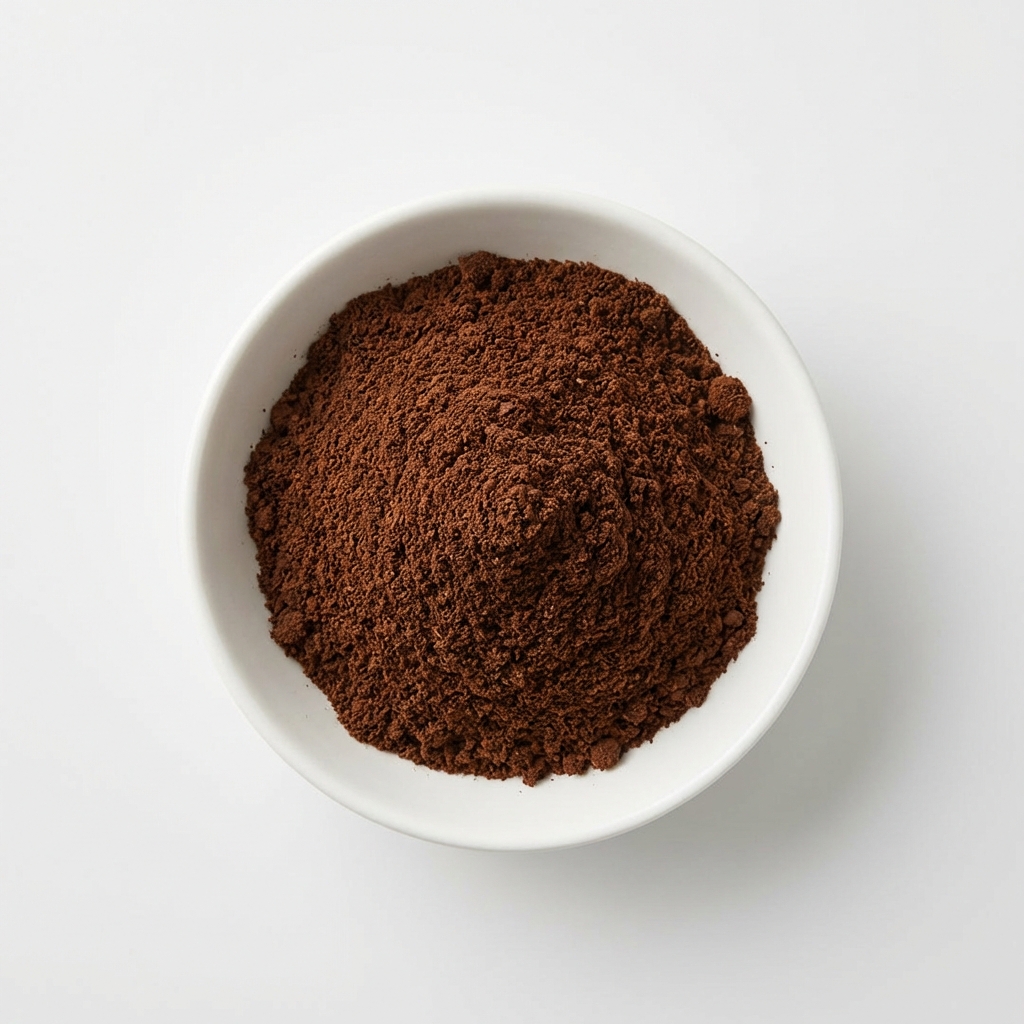
The grind should look like coarse sea salt. Finer than that and the cup turns silty and bitter; much coarser and it tastes weak no matter how long you wait. If you don't have a grinder, every coffee in this post can be ordered with a French Press grind. Our coffee grind size guide shows how it compares to the other brewers.
Water matters less than people fear. In 2020, a UC Davis team brewed coffee at 87, 90 and 93 °C at a fixed strength and found brew temperature had little effect on how it tasted (Scientific Reports, 2020). So boil the kettle, wait 30 seconds, and stop worrying about the thermometer.
Here's the ratio chart we use:
| Press size | Coffee | Water | Ratio |
|---|---|---|---|
| 350 ml (3-cup) | 20 g | 330 ml | about 1:16 |
| 600 ml (4-cup) | 30 g | 500 ml | about 1:16 |
| 1 litre (8-cup) | 55 g | 900 ml | about 1:16 |
Never fill a press to the very brim. You need about 2 cm of room for the crust and the plunger.
The 5 best French press recipes for medium roast coffee
1. The classic 4-minute press (Attikan Washed Coffee)
This is the recipe on the side of the box, done properly. We wrote it for Attikan Washed Coffee, a medium roast washed Arabica with citrus, floral notes and a chocolate finish. It's clean enough that you'll taste the difference between this and a supermarket bag.
- Add 30 g of Attikan Washed, ground for French press, to a 600 ml press.
- Pour in 500 ml of water about 30 seconds off the boil (around 94 °C). Make sure all the grounds get wet.
- Put the lid on, plunger up. Start a 4-minute timer.
- At 4 minutes, press down slowly, over about 20 seconds.
- Pour everything into cups or a jug straight away.
It's bright, sweet and full. If it tastes sharp, go to 4 minutes 30 seconds next time.
2. The long, lazy steep (Koraput, Odisha Naturals Coffee)
This is basically James Hoffmann's method from his 2016 video, which has become the default for a lot of home brewers: break the crust, skim, then wait several more minutes so the fines settle, and use the plunger only as a strainer (James Hoffmann on YouTube, 2016). As of 2026, America's Test Kitchen recommends a similar break-and-skim step, and its tasters found the coffee "distinctly rounder, sweeter, and more complex" (America's Test Kitchen, 2026).
We use it with Koraput, Odisha Naturals Coffee, a natural process medium roast from Odisha. It's winy, orangey and caramel sweet, and all that fruit comes through clearer without the sludge.
- 30 g coffee, 500 ml water just off the boil. Lid on, no stirring.
- At 4 minutes, stir the crust gently with a spoon. Skim off the foam and floating grounds with two spoons.
- Wait 5 to 8 more minutes. Yes, really.
- Lower the plunger only to the surface of the coffee, then pour slowly.
Honestly, it's the best French press coffee we make. It's also lukewarm-ish by the time you drink it, around 70 °C, which we've come to like.
3. French press with frothed milk (Filter Coffee, Pure Arabica)
Most of India drinks coffee with milk, and the press is quietly good at it. Brew strong, then use the press itself to froth the milk. We use Filter Coffee (Pure Arabica) in a Medium roast with a French Press grind. At ₹440 for 250 g it's the best value medium roast we sell, and its caramel and nutty notes love milk.
- Brew 24 g of coffee with 240 ml water at 94 °C for 5 minutes. Press and pour into two mugs.
- Rinse the press. Add 120 ml of hot milk, around 65 °C.
- Pump the plunger up and down quickly, about 20 times, until the milk doubles in volume.
- Pour the foamed milk over the coffee. Sugar to taste.
The ratio is 1:10, stronger than the classic, so the coffee doesn't get lost under the milk. Full-cream milk foams best.
4. Cold steep in the press (Karadykan Estate Coffee)
You don't need a cold brew maker to make cold brew. A French press does the job fine, and the plunger takes care of filtering. Order Karadykan Estate Coffee and pick the Medium roast. Its chocolate, nutty and orange notes turn into something like chocolate milk when cold.
- Add 60 g of coarse coffee to a 1 litre press. Pour in 600 ml of room-temperature filtered water and stir.
- Lid on, plunger up, into the fridge for 14 to 16 hours.
- Press slowly and pour the concentrate into a bottle.
- Serve 1 part concentrate to 1 part cold water or milk, over ice.
One honest caveat. Cold brew is often sold as "less acidic," but a 2018 study found hot and cold brews had a similar pH, between 4.85 and 5.13 (Scientific Reports, 2018). It tastes softer, but it isn't magic for your stomach. If you want a dedicated brewer, see our roundup of the best cold brew coffee makers under ₹2,000.
5. The strong small cup (Koraput, Odisha Washed Coffee)
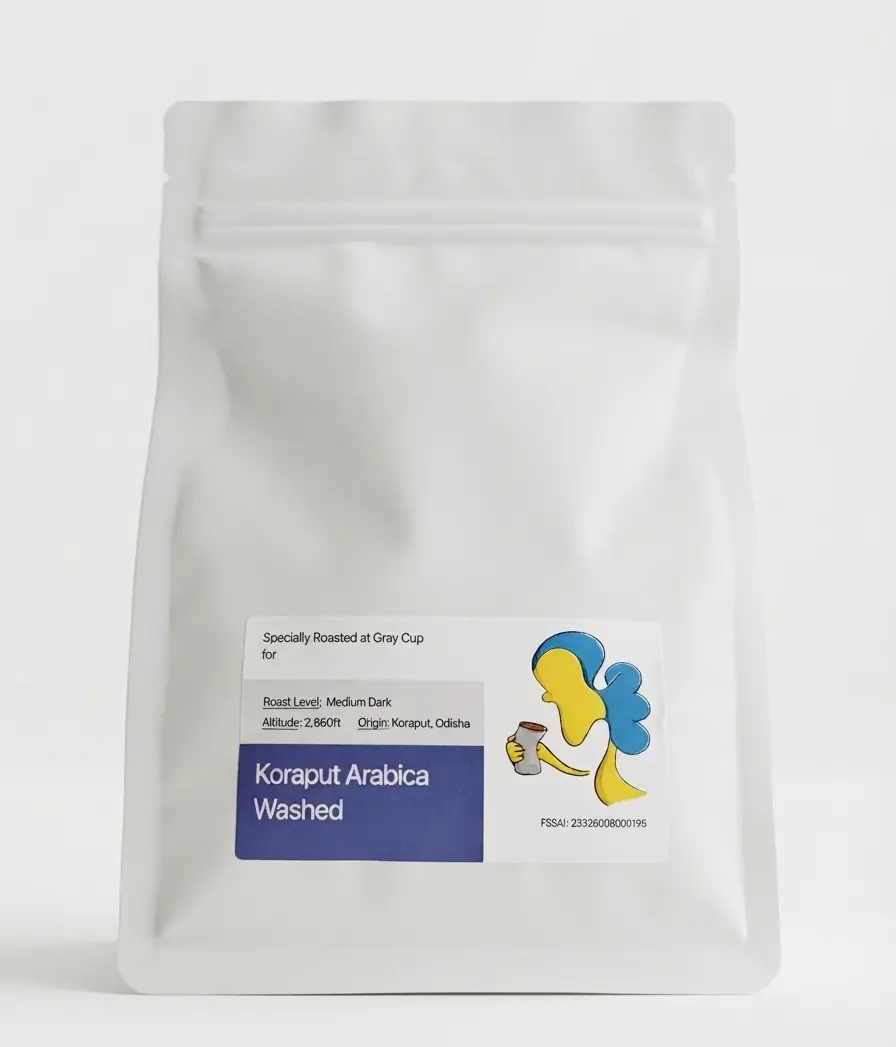
Some mornings you want 100 ml of something serious, not a big mug. This is for a small 350 ml press, and it's written for Koraput, Odisha Washed Coffee in the Medium roast, which is nutty, caramel sweet and has a little guava in it.
- 22 g coffee, a touch finer than usual (medium-coarse), 200 ml water at 94 °C.
- Stir once at 30 seconds. Steep 5 minutes total.
- Press, then pour into two 100 ml cups.
At about 1:9, it's close to double strength. It drinks almost like a long, soft espresso. Not every coffee holds up at this ratio, but this one does.
All five recipes at a glance
| Recipe | Gray Cup coffee | Coffee | Water | Time |
|---|---|---|---|---|
| Classic 4-minute | Attikan Washed Coffee | 30 g | 500 ml at 94 °C | 4 min |
| Long, lazy steep | Koraput, Odisha Naturals Coffee | 30 g | 500 ml off the boil | 9-12 min |
| With frothed milk | Filter Coffee (Pure Arabica), Medium | 24 g | 240 ml at 94 °C | 5 min |
| Cold steep | Karadykan Estate Coffee, Medium | 60 g | 600 ml cold | 14-16 hours |
| Strong small cup | Koraput, Odisha Washed Coffee, Medium | 22 g | 200 ml at 94 °C | 5 min |
Fixing a French press cup that tastes wrong
Most bad press coffee comes down to three things: grind, time and leftovers.
- Muddy or gritty: grind is too fine, or you pressed too hard. Try recipe 2 and only lower the plunger to the surface.
- Weak and sour: grind is too coarse or the steep was too short. Add 30 to 60 seconds before changing anything else.
- Bitter by the second cup: you left it in the press. Decant it all.
- Flat and papery: the coffee is stale. Buy smaller packs and read our tips on how to store coffee.
One thing worth knowing. Press coffee isn't paper filtered, so it keeps oils called cafestol and kahweol that can raise cholesterol. A large Norwegian study published in 2020 found unfiltered coffee carried about 30 times the concentration of these compounds as filtered coffee (ScienceDaily, 2020). If your cholesterol is high, a pour-over dripper is the safer daily brewer.
Most Indians aren't brewing at home yet. In its 2025 report, the USDA expected soluble coffee to make up about 70% of India's coffee consumption (Daily Coffee News, 2025). A French press is the cheapest, simplest way out of that habit.
Buy your coffee stock from Gray Cup
The press is the easy part. A ₹500 press with fresh coffee beats a ₹3,000 press with a stale bag every time. Gray Cup roasts every coffee in this post to order, each one available in a Medium roast, and grinds it coarse for French press if you ask.
What we'd put in the cupboard, with live 250 g prices:
- Filter Coffee (Pure Arabica), ₹440. The value pick, and our choice for milk.
- Koraput, Odisha Washed Coffee, ₹550. Order it Medium for the strong small cup.
- Karadykan Estate Coffee, ₹560. Pick the Medium roast. Our cold steep coffee.
- Koraput, Odisha Naturals Coffee, ₹620. Fruity, for the long steep.
- Attikan Washed Coffee, ₹650. The one we'd buy first for a classic press.
- Baarbara Washed AA, ₹689. Caramel and white chocolate, available in Medium if you want to branch out.
Prefer whole single-origin beans to grind yourself? Our sister site Indian Roasted Coffee roasts Indian estate coffee to order and ships it rested.
Frequently Asked Questions
What coffee beans are best for French press?
Medium roast Arabica beans are the best match for most people. They have enough body for immersion brewing and enough sweetness to stay pleasant over a 4-minute steep. Gray Cup's favourite is Attikan Washed Coffee, and Filter Coffee (Pure Arabica) in a Medium roast is the best value for milk coffee.
How much coffee do I use in a French press?
Gray Cup recommends 30 g of coarse ground coffee for 500 ml of water, roughly 1:16, for a standard 600 ml press. That's about 5 level tablespoons. For a stronger cup or for milk, tighten it to 1:10 or 1:12. Keep the grind coarse and adjust strength with the dose, not the grind.
How coarse should the grind be for a French press?
Coarse, like sea salt or cracked pepper. Too fine and the coffee turns muddy, bitter and hard to plunge. If you don't own a grinder, choose the French Press grind when ordering from Gray Cup and the coffee arrives ready to brew. For a stronger small cup, go one step finer to medium-coarse.
How long should coffee steep in a French press?
Four minutes is the standard steep for hot coffee. For a sweeter, cleaner cup, break the crust at 4 minutes, skim it, and wait another 5 to 8 minutes before pouring. For cold brew made in a press, steep 14 to 16 hours in the fridge.
Medium roast coffee for your French press
See all →- Filter Coffee (Pure Arabica)
Best value, great with milk
From ₹440
- Koraput, Odisha Washed Coffee
Nutty, caramel, choose Medium
From ₹550
- Karadykan Estate Coffee
Chocolate, best cold steep
From ₹560
- Koraput, Odisha Naturals Coffee
Winy, orange, caramel
From ₹620
- Attikan Washed Coffee
Citrus, floral, classic press
From ₹650
- Baarbara Washed AA
Caramel, white chocolate
From ₹689
- Brown Valley HSD Coffee
Milk chocolate, hazelnut
From ₹750